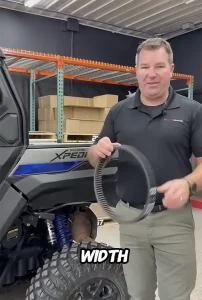
One of the first modifications many UTV owners make is installing larger tires. Bigger tires improve ground clearance, look great, and make it easier to tackle rocks, mud, snow, and rough trails.
What many owners don’t realize is that changing tire size also changes the workload placed on the entire drivetrain.
If you’ve been wondering, can bigger tires damage your clutch, the answer is yes. Without the proper clutch calibration, oversized tires can increase heat, accelerate wear, shorten belt life, and reduce overall performance.
Bigger Tires Change the Gear Ratio
Installing taller tires is similar to changing the final drive ratio on your UTV.
Each revolution of the tire covers more ground, which sounds like a good thing. The tradeoff is that the engine and clutch now have to work harder to get those larger, heavier tires moving.
The effect becomes especially noticeable when accelerating from a stop, climbing steep hills, towing, or carrying heavy loads.
More Rotating Weight Means More Work
Most aftermarket tires aren’t just taller.
They’re also significantly heavier than the factory tires they replace. Many owners also install larger wheels at the same time, adding even more rotating mass.
Every time you press the throttle, your clutch must accelerate that additional weight. The extra effort creates more heat throughout the CVT system and places greater stress on both the clutch components and the drive belt.
Heat Is the Enemy
Heat is one of the biggest factors affecting clutch and belt life.
When the clutch has to work harder than it was designed to, temperatures increase. Excessive heat accelerates wear on rollers, bushings, ramps, and other internal components while also shortening belt life.
Over time, that additional stress can lead to rough engagement, reduced performance, and more frequent maintenance.
Symptoms of an Overworked Clutch
If your UTV has larger tires but still uses the factory clutch calibration, you may notice slower acceleration, sluggish throttle response, increased belt temperatures, reduced top-end performance under load, or a clutch that feels jerky during low-speed driving.
Some owners also notice more frequent belt replacement or a burning belt smell after climbing hills or towing.
The Solution Isn’t Smaller Tires
The good news is that larger tires don’t automatically create problems.
The key is making sure your clutch system is properly calibrated for the additional load.
A clutch designed specifically for larger tires allows the engine to stay within its ideal operating range while reducing unnecessary heat and improving belt life. The result is smoother engagement, stronger acceleration, better throttle response, and improved drivability in virtually every condition.
Built for Real-World Upgrades
DURACLUTCH systems are engineered to work with popular tire upgrades and demanding real-world applications. Whether you’re running oversized mud tires, hauling heavy equipment, climbing mountain trails, or working on the farm, proper clutch calibration helps your engine deliver power more efficiently while reducing stress on the entire CVT system.
Combined with DURACLUTCH’s enclosed primary design that helps keep dirt out and its six-roller system that promotes smooth engagement, the result is a clutch built to handle modifications that often overwhelm factory components.
Protect Your Investment
Oversized tires are one of the best upgrades you can make to a UTV, but they shouldn’t come at the expense of clutch life.
If you’re planning to move beyond the factory tire size—or you’ve already made the switch—make sure your clutch system is prepared for the additional workload.
Understanding can bigger tires damage your clutch is the first step. Choosing a clutch that’s engineered for those larger tires is the next step toward protecting your UTV while enjoying all the benefits that bigger tires have to offer.