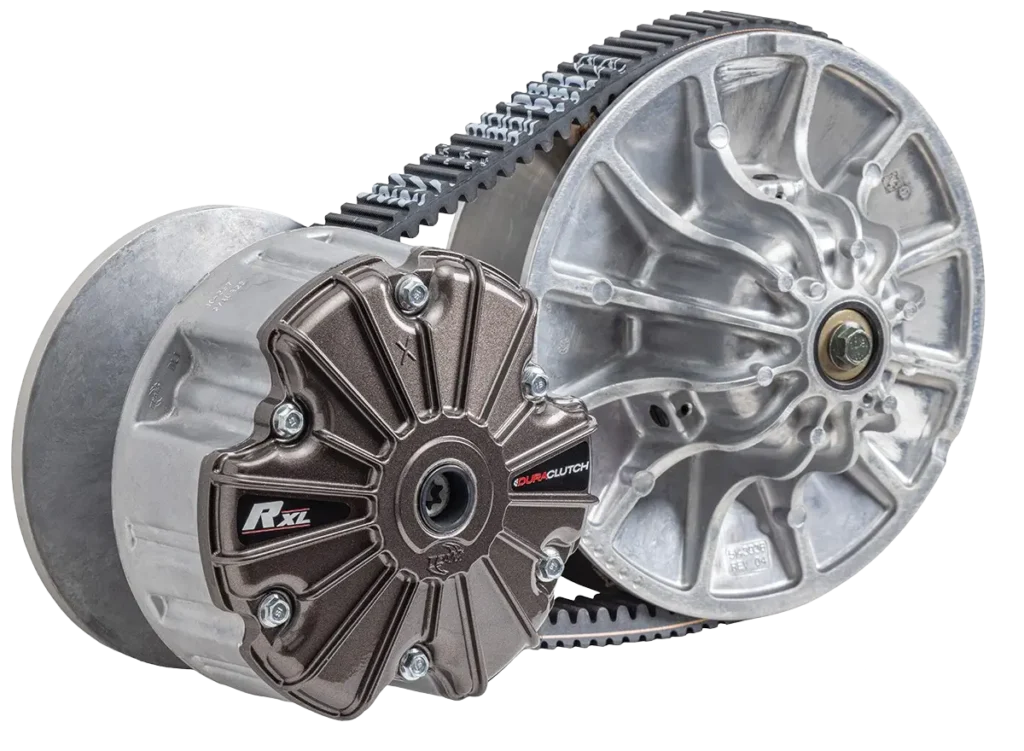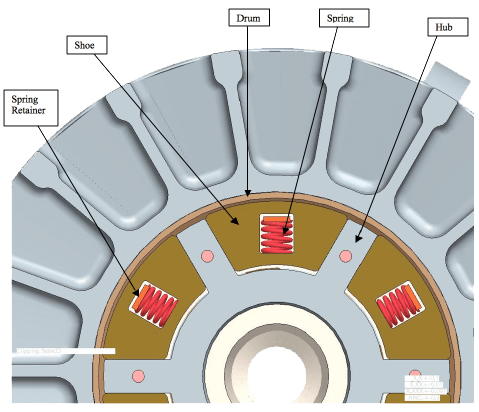



Notice the shoes and drums have clearance between them which means the shaft can rotate while the sheaves overrun and allow the system to idle. The red compression springs set the engagement speed, currently around 1450 RPM (±100 RPM)
This means a much smoother start to your vehicle, and increased starting torque, allowing you to pull more weight from a dead stop than you can with a conventional clutching system.You can now see the clearance between the shoes has been eliminated which means the shaft has reached the 1450 RPM speed required to overcome the spring force and the shaft is now driving the sheaves via the two centrifugal clutches (one on the back face of the stationary sheave and one on the back face of the movable sheave).
In the condition of an overload (in the low to mid sheave position), the frictional force of the centrifugal clutch shoes is lower than the frictional force between the belt and the sheave faces so the clutch will slip and the belt will not get damaged. In the mid to high sheave shift position, the shoes will be fully locked and there will be no loss of efficiency or performance, making the clutch a seamless transition.
It is also important to note that because the centrifugal clutches act as the overrunning device between the shaft and the sheaves, there is always constant pinch between the sheaves and the belt. This means there is no initial scrubbing every time the CVT starts shifting, resulting in prolonged belt life and a lot less maintenance over the life of the vehicle.
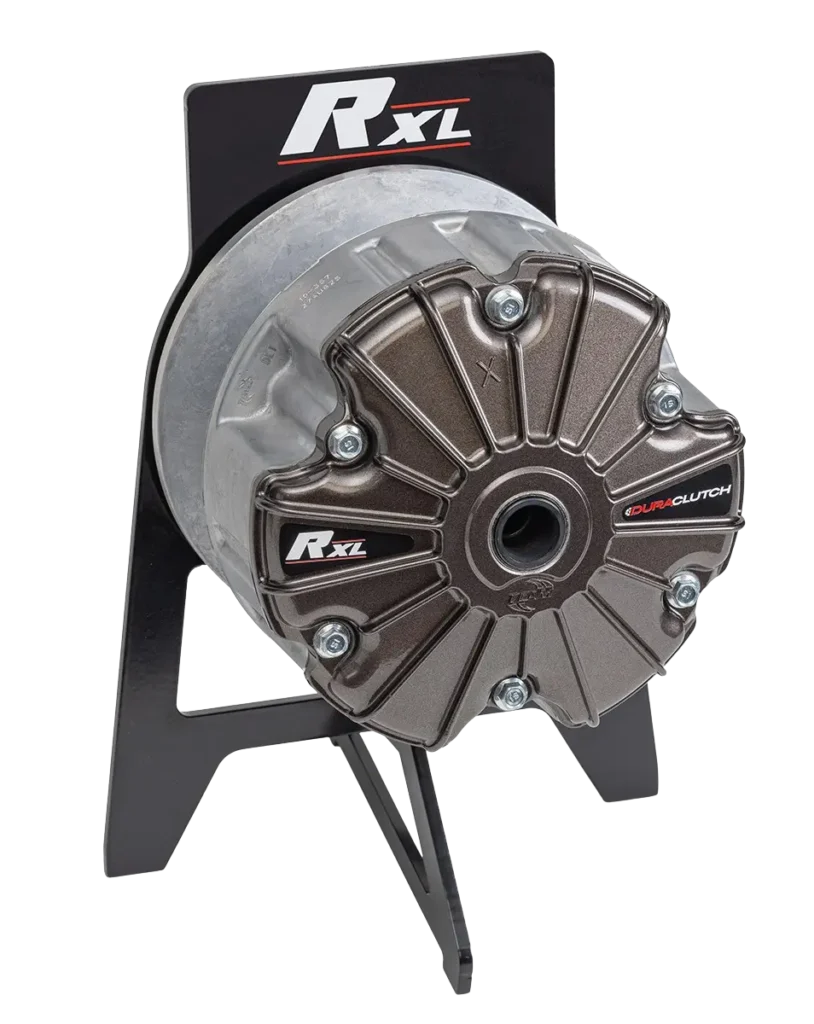
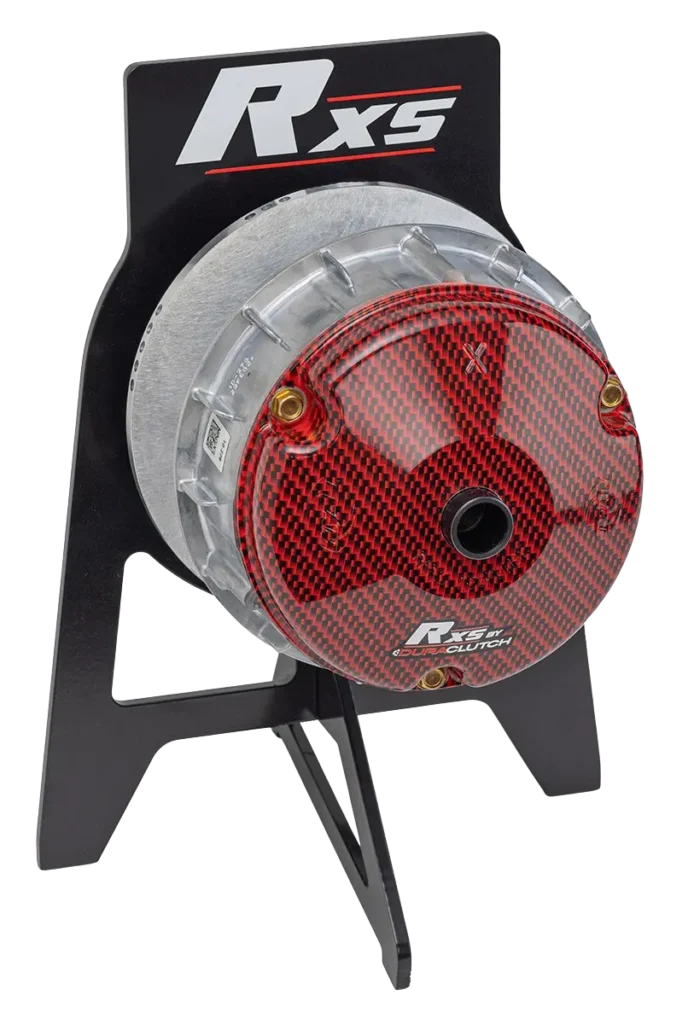
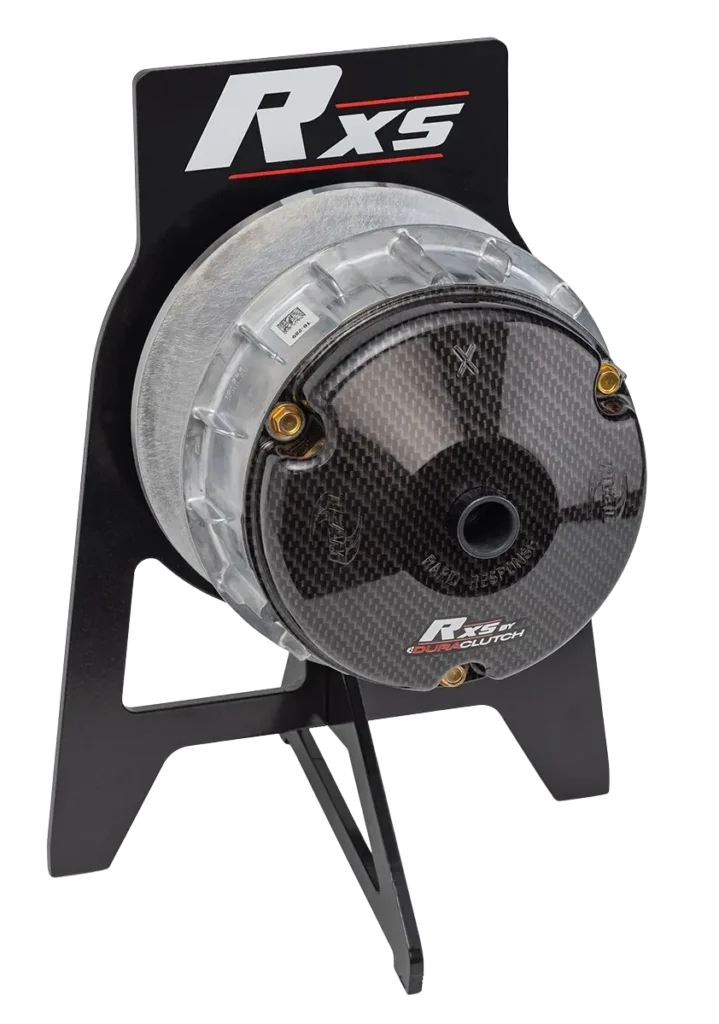
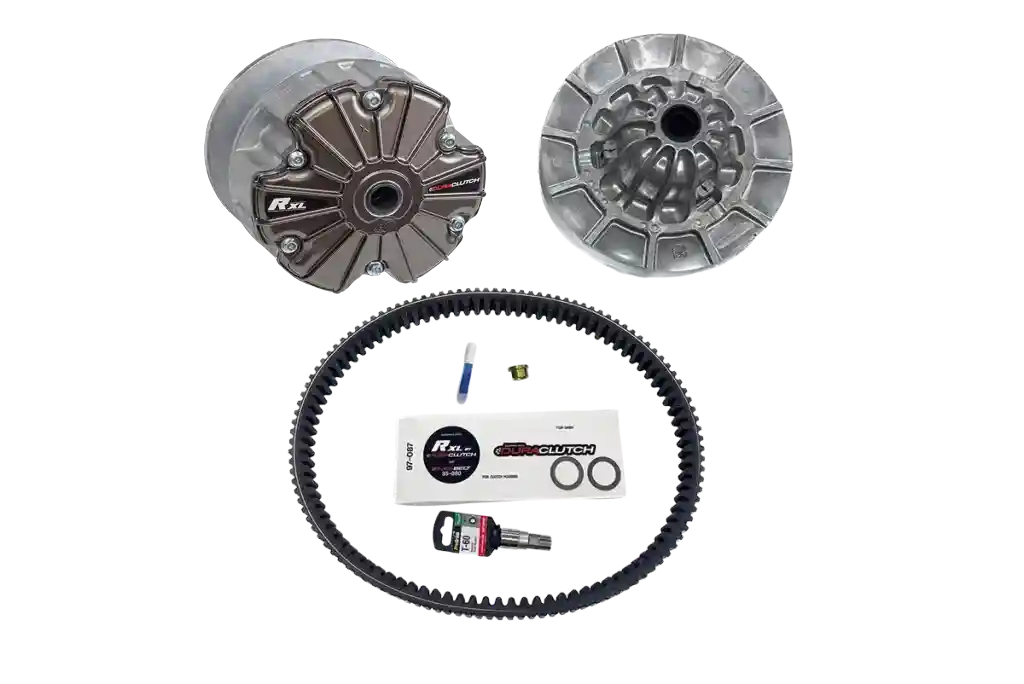
The DURACLUTCH is the same size as a standard CVT clutch and will fit up to any existing vehicle platform that currently uses a Polaris CVT without any modifications to the engine crankcase, clutch backplate, crankshaft or clutch cover.
The DURACLUTCH is fully tunable (fly weights and compression spring) and is designed to work with the existing Polaris secondary clutches and belts.
The DURACLUTCH features a one-way overrunning clutch that rides on the main shaft that will give the rider complete engine braking for downhill descents by back-driving the crankshaft in the engine and taking advantage of the compression on the pistons for better control and less wear on the brakes.
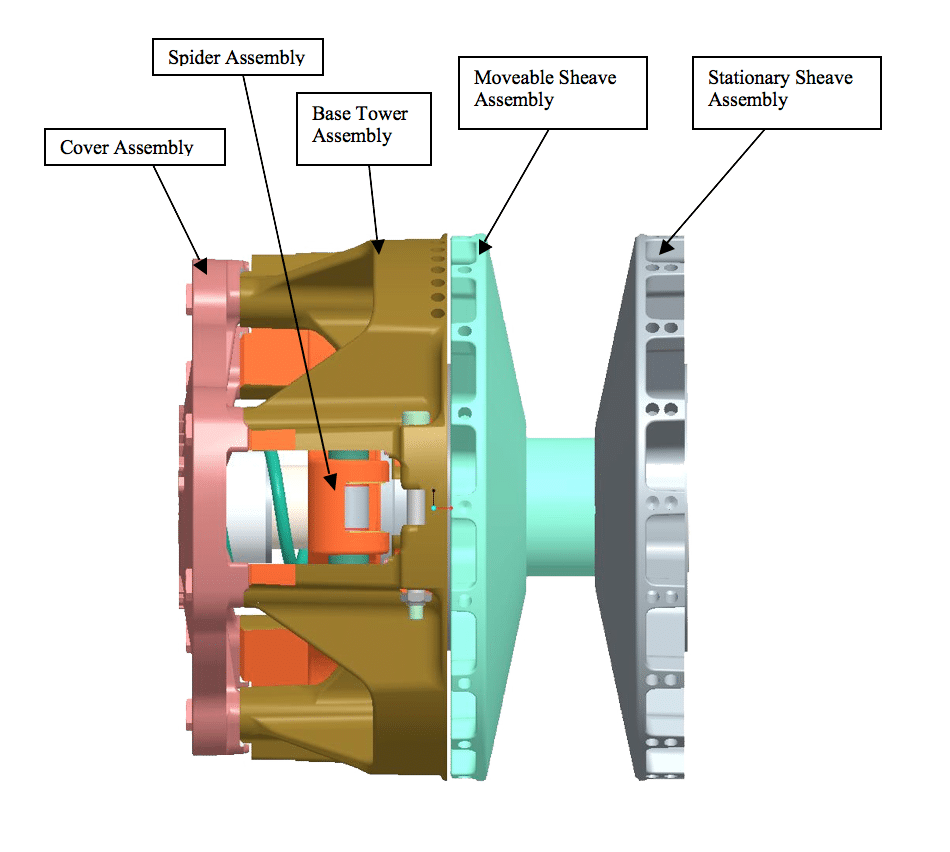
At this point, the two centrifugal clutches that are located within the movable and stationary sheaves are fully locked to the drums and will now carry more torque than the belt to sheave interface so there is no loss of performance at the high end (throttle wide open).