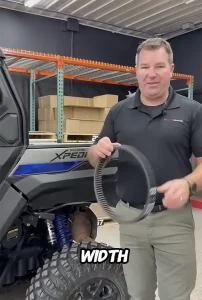
A slipping CVT belt doesn’t always fail all at once. In many UTVs and ATVs, the first signs are changes in how the machine accelerates, engages or responds under load.
You may notice the engine revving higher without a matching increase in speed. Acceleration may feel sluggish. You might smell hot rubber, hear unusual squealing or find excessive belt dust inside the clutch cover.
Those symptoms shouldn’t automatically be blamed on the belt, because problems elsewhere in the CVT system can produce similar behavior. But they are good reasons to take a closer look.
What Does a Slipping CVT Belt Feel Like?
A properly functioning CVT system should transfer engine power smoothly through the primary clutch, drive belt and secondary clutch.
When the belt isn’t maintaining the grip it needs, engine RPM can increase without the vehicle accelerating the way you expect.
Depending on the machine and the cause of the problem, you may experience:
- Higher engine RPM without a corresponding increase in vehicle speed
- Sluggish or inconsistent acceleration
- Hesitation when taking off
- A squealing or chirping sound from the CVT area
- A burning-rubber smell
- Excessive heat around the clutch and belt
- Unusual amounts of belt dust inside the clutch housing
- Poor performance when climbing hills, towing or carrying a heavy load
Sometimes the symptoms are subtle. Other times you’ll know immediately that something isn’t transferring power the way it should.
1. The Engine Revs, but the UTV Doesn’t Accelerate Normally
This is one of the most recognizable symptoms.
You press the accelerator and hear the engine RPM increase, but the machine doesn’t gain speed as quickly as it normally does.
Under heavier loads or while climbing a hill, the problem may become even more noticeable.
The CVT is supposed to transfer that engine power to the drivetrain. If the belt is slipping rather than gripping the clutch sheaves properly, some of that power isn’t making it where it needs to go.
2. Acceleration Feels Sluggish or Inconsistent
A slipping belt can make a machine that normally feels responsive suddenly seem lazy.
Acceleration may be slower than normal, inconsistent or noticeably worse when the machine is under load.
This can sometimes be mistaken for an engine problem because the engine itself may sound perfectly willing to accelerate. The problem is getting that power through the CVT and to the wheels.
3. You Smell Hot or Burning Rubber
A burning smell coming from the CVT area deserves attention.
Friction creates heat, and a belt that is slipping excessively can generate a lot of it.
Heat is particularly hard on CVT belts. Once excessive temperature begins damaging the belt, its ability to operate properly can deteriorate further.
If you smell hot rubber while riding, especially after towing, climbing, crawling at low speed or operating under a heavy load, don’t simply assume it’s normal.
4. You Hear Squealing or Chirping From the CVT
A squealing belt can be another sign that something isn’t right.
Noise by itself doesn’t prove that the belt is slipping. Belt condition, contamination, clutch condition and other factors can all contribute to unusual CVT noises.
But when squealing occurs along with poor acceleration, excessive heat or other symptoms on this list, it becomes much more useful diagnostically.
5. You’re Finding Excessive Belt Dust
Some belt dust inside a CVT housing is normal. The belt is a wear component operating in a demanding environment.
An unusual amount of belt material is different.
Excessive heat and slipping can accelerate belt wear, leaving more dust and debris inside the clutch housing.
If you open the CVT cover and find considerably more belt dust than you normally see, inspect the belt and clutch system rather than simply cleaning everything out and putting the cover back on.
6. The Problem Gets Worse Under Load
A marginal belt or CVT problem can become much easier to notice when you ask more from the machine.
You may not notice much while cruising easily on flat ground, but the symptoms become obvious when you:
- Climb a steep hill
- Tow a trailer
- Carry a heavy load
- Drive through mud, sand or other high-resistance terrain
- Operate for extended periods at low speed
Those conditions put additional demands on the CVT system and can generate significantly more heat.
What Causes a CVT Belt to Slip?
The belt itself isn’t always the root cause.
A slipping CVT belt can result from several different conditions, including:
- A worn or damaged drive belt
- A belt that has become glazed from excessive heat
- Contamination on the belt or clutch sheaves
- Improper belt fitment
- Worn or damaged clutch components
- Excessive heat inside the CVT system
- Operating repeatedly in high gear when low gear is more appropriate
- Heavy towing, hauling or low-speed operation
- Incorrect clutch setup for the vehicle or application
This is why simply replacing the belt doesn’t always solve a recurring belt problem.
If a machine repeatedly damages or wears out belts, it’s worth determining why before sacrificing another one.
High Gear vs. Low Gear Can Make a Big Difference
One of the easiest ways to generate unnecessary CVT heat is using high gear when the machine should be in low.
Low-speed operation, heavy loads, towing and difficult terrain can place considerable stress on a CVT system when the wrong gear range is used.
Using low gear when conditions call for it reduces the load on the belt and helps the CVT operate more effectively.
This is particularly important on utility machines such as the Polaris RANGER, where owners routinely tow, haul and operate at low speeds.
Can You Keep Driving With a Slipping CVT Belt?
Continuing to operate a machine with obvious belt slip isn’t a great strategy.
If slipping is generating excessive heat, continued operation can further damage the belt and potentially leave you stranded when it finally fails.
More importantly, you want to know whether the belt itself is the problem or whether something else in the CVT system is causing it to slip.
If the problem keeps returning after belt replacement, that’s a strong indication that it’s time to look beyond the belt.
What Should a Healthy CVT Belt Look Like?
Inspect the belt according to the vehicle and belt manufacturer’s recommendations.
Things worth looking for include:
- Cracks or damaged areas
- Missing belt material
- Glazed or unusually shiny surfaces
- Uneven wear
- Fraying or damaged belt edges
- Evidence of excessive heat
- Width that has worn beyond the manufacturer’s service specification
If the belt shows obvious damage or is outside its wear specification, replacement is usually the sensible move.
Don’t Just Treat the Belt. Look at the CVT System.
A drive belt is only one part of the CVT system.
If you’re repeatedly replacing belts, experiencing jerky engagement, generating excessive belt heat or seeing premature belt wear, the underlying clutch system deserves attention too.
That’s one of the reasons DURACLUTCH approaches the problem as a complete clutch system rather than treating the drive belt as an isolated component.
DURACLUTCH systems are designed to provide smooth engagement and controlled power transfer for supported Polaris UTV applications. DURABELT drive belts are engineered specifically for demanding UTV use and are available for supported applications as well.
If you’re trying to determine whether the problem is the belt, the clutch or both, contact DURACLUTCH and tell us what your machine is doing.
Is Your CVT Belt Slipping? Pay Attention to the Symptoms
A slipping belt may begin as nothing more than slightly sluggish acceleration or an occasional squeal. If excessive heat and wear continue, a relatively minor symptom can eventually become a failed belt.
Pay attention to changes in acceleration, RPM, heat, smell, noise and belt condition.
And if your machine seems to be unusually hard on drive belts, don’t assume that repeatedly replacing the belt is the only solution. The real problem may be elsewhere in the CVT system.